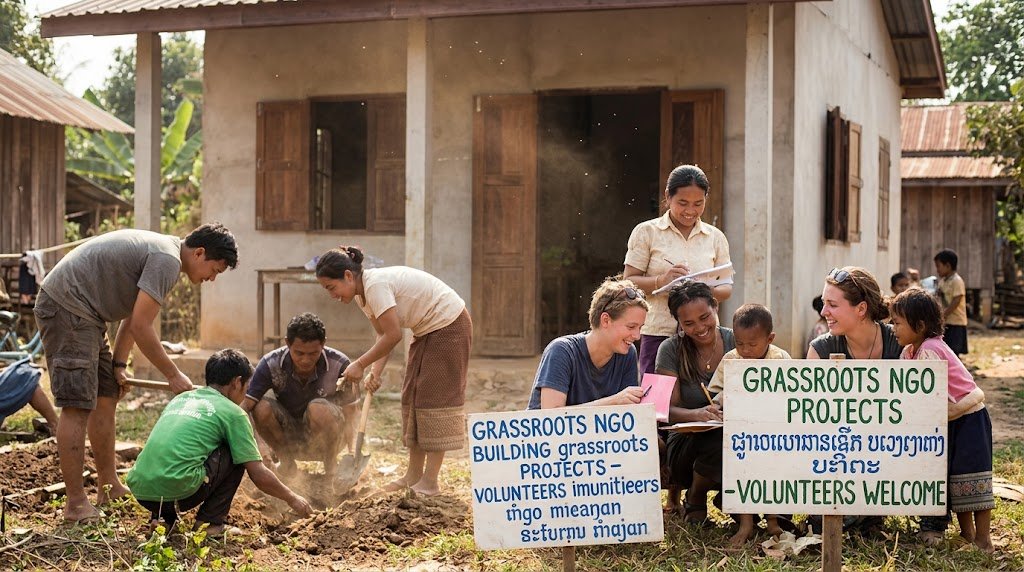

Volunteering with a grassroots NGO abroad offers an opportunity to contribute to community-led projects, learn from local people, and understand social challenges beyond what headlines can explain. Whether you are interested in education, environmental conservation, public health, women’s empowerment, or community development, working alongside a locally rooted nonprofit can provide valuable experience. However, meaningful volunteering requires more than good intentions. It involves preparation, cultural awareness, realistic expectations, and a commitment to supporting the priorities of the people you hope to help.
Unlike large international charities, grassroots organizations often operate close to the communities they serve. Their teams may include local educators, community organizers, healthcare professionals, farmers, and advocates who understand regional needs firsthand. International volunteers can contribute useful skills, but their involvement should strengthen local efforts rather than replace local expertise.
This guide explains how grassroots NGO volunteering works, what daily life may look like, how to identify ethical opportunities, and how to prepare for a placement that creates practical, lasting value.
What Is Volunteering With a Grassroots NGO Abroad?
A grassroots NGO is a nongovernmental organization that typically works at the local or community level. It may address issues such as poverty, unequal access to education, environmental degradation, public health, food insecurity, or limited economic opportunities.
These organizations frequently develop programs in response to needs identified by community members. Some operate from a single village or neighborhood, while others coordinate projects across a wider region.
Volunteering with a grassroots NGO abroad means contributing your time, knowledge, professional abilities, or practical support to one of these organizations in another country.
Examples include:
- Supporting community-led literacy programs.
- Helping nonprofit teams improve websites, databases, or digital communications.
- Participating in locally designed environmental restoration projects.
- Assisting with fundraising research, grant writing, or administrative work.
- Supporting community workshops under the supervision of qualified local professionals.
- Helping document project outcomes, organize resources, or evaluate program effectiveness.
The exact role depends on the NGO’s priorities, your qualifications, the placement’s duration, and local regulations.
How Grassroots NGOs Differ From International Charities
Large international organizations may have extensive funding networks, established procedures, and teams operating across multiple countries. Grassroots NGOs generally work closer to the communities affected by a particular issue.
That proximity can be a major advantage. Local teams often understand language differences, cultural expectations, political realities, and practical obstacles that outsiders may overlook.
However, smaller organizations may also have limited funding, fewer staff members, and less capacity to manage international volunteers. A responsible placement recognizes these constraints and provides appropriate supervision rather than expecting a small local team to accommodate visitors without preparation.
Why Do People Volunteer With a Grassroots NGO Abroad?
People choose international volunteering for different reasons. Some want to contribute to a specific cause, while others hope to develop professional skills, experience another culture, or explore a future career in development work.
The strongest placements connect personal goals with a genuine community need.
1. Contribute to Community-Led Development
Community development is most effective when local people help define the problem, design the response, and assess the results.
For example, an NGO working to improve school attendance might already understand the barriers families face. Volunteers could help organize learning resources or analyze attendance records, while local educators determine the most appropriate interventions.
The volunteer’s contribution becomes part of an existing strategy rather than an independent attempt to solve a complex problem.
2. Develop Practical and Transferable Skills
A well-designed placement can strengthen skills that are useful in both nonprofit and commercial careers.
Depending on your responsibilities, you may develop experience in:
- Project coordination and reporting.
- Research, data collection, and analysis.
- Cross-cultural communication.
- Digital marketing and website management.
- Community engagement and stakeholder communication.
- Fundraising, grant research, and donor relations.
- Teamwork, adaptability, and problem-solving.
These experiences are particularly valuable when volunteers receive meaningful responsibilities, constructive feedback, and opportunities to learn from experienced local staff.
3. Understand Different Cultures and Social Realities
Living and working within a community can reveal how social challenges are shaped by local history, economic conditions, public policy, and cultural expectations.
You may discover that a program that appears straightforward from the outside requires careful negotiation with families, community leaders, schools, or local authorities.
This experience encourages humility. It also helps volunteers recognize that communities facing challenges are not defined solely by those challenges; they possess knowledge, relationships, skills, and ambitions of their own.
4. Build Long-Term Professional Connections
Working alongside local staff and other volunteers can create professional relationships that continue after the placement ends.
These connections may help you understand international development careers, discover future opportunities, or collaborate on research and community projects.
The value of these relationships depends on mutual respect and genuine collaboration, not simply the number of people added to a professional network.
What to Expect During a Grassroots NGO Volunteer Placement
Every placement is different, but understanding common working arrangements can help you prepare realistically.
A Typical Day
Your schedule may include a mixture of practical tasks, planning meetings, community activities, and administrative responsibilities.
A day could involve:
- Morning: Attend a team briefing and review project priorities.
- Late morning: Support a supervised workshop, prepare educational materials, or work on a digital project.
- Afternoon: Enter data, coordinate supplies, document activities, or discuss progress with local colleagues.
- End of day: Review completed tasks, identify obstacles, and agree on the next steps.
Field-based projects may involve travel between villages, outdoor work, changing schedules, or limited internet access. Office-based placements may be more structured but still require flexibility.
Do not assume every day will involve direct contact with beneficiaries. Research, logistics, recordkeeping, and behind-the-scenes coordination can be essential to a program’s success.
Limited Resources and Changing Priorities
Some grassroots NGOs work with modest budgets and rely on shared equipment, donated supplies, or community spaces. Internet connectivity, transport, and access to printing facilities may be inconsistent.
Projects can also change direction when funding becomes available, weather conditions shift, or community priorities evolve.
A reliable volunteer responds constructively without treating limited resources as evidence that the organization lacks value. At the same time, basic safety, appropriate supervision, and clear communication should never be dismissed as optional.
Cultural Adjustment and Emotional Challenges
Living in an unfamiliar environment can involve language barriers, different social customs, unfamiliar food, homesickness, and uncertainty about expectations.
You may also encounter difficult stories or situations involving poverty, displacement, discrimination, or environmental damage. Emotional responses are normal, but volunteers should avoid treating other people’s experiences as opportunities for personal drama or self-promotion.
Responsible organizations establish boundaries, provide guidance, and offer a process for raising concerns. Official overseas volunteering guidance also recommends considering the psychological demands of placements involving vulnerable people or challenging conditions.
How to Find an Ethical Grassroots NGO Abroad
Choosing the right organization is one of the most important decisions you will make. An attractive website or emotional promotional video does not necessarily demonstrate that a project is effective, safe, or accountable.
Before paying fees or booking travel, investigate the organization carefully.
1. Verify Its Registration and Local Presence
Look for evidence that the NGO operates legitimately in the country where the project takes place.
Depending on local requirements, useful evidence may include:
- Registration with the relevant national or regional authority.
- A physical office or clearly identified local team.
- A documented history of community projects.
- Public information about leadership and governance.
- Partnerships with credible local institutions.
- Reports, project updates, or independently verifiable community activities.
Registration requirements vary by country, so the absence of one particular document does not automatically prove misconduct. Ask which legal requirements apply and how the organization meets them.
2. Ask Who Defines the Project’s Priorities
A responsible grassroots NGO should be able to explain how community members participate in decisions.
Ask the organization:
- How are community needs identified?
- Who decides which activities receive funding?
- How do residents provide feedback or challenge decisions?
- What happens when a proposed activity conflicts with local priorities?
- How does the NGO evaluate whether a project is working?
These questions help distinguish community-led development from programs designed primarily to attract international visitors.
3. Understand Where Your Fees Go
Some volunteer placements charge program fees to cover accommodation, meals, local transport, supervision, training, insurance, and administrative costs. Paying a fee is not inherently unethical, but the organization should explain it clearly.
Request an itemized breakdown covering:
- Program administration.
- Accommodation and meals.
- Local staff and project expenses.
- Transport and excursions.
- Insurance and emergency support.
- Any additional charges or refundable deposits.
Find out how much money reaches the local project and whether local staff receive fair compensation. Be cautious when an organization cannot explain its fees or pressures applicants to pay immediately.
4. Check Supervision and Safeguarding
Safeguarding refers to the policies and practices used to prevent abuse, exploitation, harassment, neglect, and other forms of harm.
Before accepting a placement, confirm that the organization has appropriate procedures for volunteers, staff, and community participants. These may include a code of conduct, designated safeguarding contact, risk assessments, reporting procedures, and background checks for roles involving children or vulnerable adults.
The UNICEF safeguarding framework emphasizes preventing harm and responding appropriately when concerns arise. Its principles are relevant to organizations working with vulnerable communities.
5. Speak to Previous Volunteers and Local Partners
Ask for contact details of former volunteers who completed a similar placement. If possible, speak with local partners or staff members as well.
Useful questions include:
- Were the responsibilities clearly explained?
- Was training provided before work began?
- Did the placement support existing community priorities?
- Were accommodation and transport arrangements reliable?
- How did the organization respond to problems?
- Would you recommend the placement to someone with similar skills?
Independent experiences can reveal practical details that promotional materials omit.
Which Volunteer Opportunities Are Best for Your Skills?
Not every placement is appropriate for every applicant. A responsible NGO should match assignments to demonstrated skills, relevant experience, training, and local requirements.
Education and Youth Development
Education projects may involve preparing learning materials, organizing supervised activities, supporting language practice, or helping teachers develop digital resources.
Volunteers should understand that they are supporting local educators, not automatically qualified to replace them. Teaching duties may require specific credentials or permission under local law.
Important: Avoid placements that give untrained short-term visitors unsupervised responsibility for children.
Environmental Conservation and Sustainable Agriculture
Environmental projects can include habitat restoration, community recycling, environmental education, biodiversity monitoring, and sustainable farming initiatives.
The most useful contribution depends on the project’s actual needs. A volunteer with ecological research experience may assist with monitoring, while someone with communication skills may help produce locally relevant educational materials.
Outdoor work may require protective equipment, physical stamina, and training. Ask how the project measures environmental outcomes rather than counting only volunteer participation.
Public Health and Community Well-Being
Public health NGOs may work on health education, sanitation, nutrition awareness, or access to community resources.
Volunteers without professional healthcare qualifications should remain within clearly defined, nonclinical responsibilities. They should never diagnose patients, provide treatment, or perform medical procedures without the required qualifications, authorization, and supervision.
Women’s Empowerment and Livelihood Development
These projects may support vocational training, entrepreneurship, financial literacy, market access, or community-led advocacy.
Useful volunteer contributions can include business research, digital literacy training, bookkeeping support, or helping participants access appropriate resources.
The NGO should protect participants’ privacy, obtain informed consent, and ensure that activities respond to the priorities of the people involved.
Communications, Technology, and Administration
Not all international volunteering requires specialized fieldwork. Remote or office-based support can be valuable when it addresses a specific organizational need.
Potential assignments include:
- Improving website accessibility and performance.
- Organizing digital records securely.
- Preparing grant applications and funding research.
- Creating communication materials in collaboration with local staff.
- Building simple monitoring dashboards.
- Documenting program activities with appropriate consent.
For many skilled volunteers, these assignments offer a practical way to contribute without taking on responsibilities for which they are not qualified.
Volunteering With a Grassroots NGO Abroad: How to Prepare
Good preparation reduces risks for both the volunteer and the host organization.
Step 1: Define Your Goals and Available Time
Start by identifying what you can realistically contribute.
Consider your professional skills, language abilities, physical requirements, travel budget, and available dates. Be honest about whether you want to work directly with communities, support operations, or gain experience in a particular field.
A short placement may be suitable for a clearly defined task, but complex projects often require continuity. Do not assume that every NGO can benefit from a visitor who is available for only a few days.
Step 2: Confirm Visa, Insurance, and Entry Requirements
Never assume that a tourist visa automatically permits unpaid volunteer work. Immigration rules differ between countries and may distinguish informal charitable activity from structured volunteering or employment.
Check the destination country’s official immigration guidance and, when necessary, contact the relevant embassy or consulate. Confirm whether the NGO can provide supporting documentation.
You should also arrange suitable travel and medical insurance, including coverage for your planned activities. Review exclusions carefully, especially for remote locations, manual labor, and medical evacuation.
The UK Foreign, Commonwealth & Development Office’s overseas volunteering guidance recommends checking the organization’s legitimacy, accommodation safety, insurance, travel arrangements, and emergency support before committing.
Step 3: Research Local Customs and Learn Basic Language Skills
Learn appropriate greetings, common expressions, workplace etiquette, and local expectations around clothing, photography, and personal space.
You do not need to become fluent before arrival. Even a basic effort to communicate respectfully can improve cooperation and demonstrate that you value the host community.
Ask the NGO which cultural practices are particularly relevant to your placement rather than relying entirely on generalized travel advice.
Step 4: Agree on a Written Role Description
Before departure, obtain written confirmation of your responsibilities, working hours, supervisor, accommodation arrangements, fees, and expected outcomes.
The role description should also explain what you are not permitted to do, how feedback will be handled, and who to contact if a safety or safeguarding concern arises.
Step 5: Prepare for Practical and Health Needs
Review destination-specific health recommendations, routine vaccinations, medication rules, transport options, and emergency contacts with appropriate medical or official sources.
Pack according to the climate, work conditions, and local expectations. Keep digital and offline copies of essential documents, and share your itinerary with a trusted person.
Common Mistakes to Avoid When Volunteering Abroad
Good intentions can still produce poor outcomes when volunteers overlook local expertise or underestimate the complexity of development work.
Avoid these common mistakes:
- Choosing an NGO based only on emotional marketing: Investigate its track record, accountability, and actual community relationships.
- Expecting to solve a major problem quickly: Sustainable change usually requires long-term local leadership and resources.
- Taking on work beyond your qualifications: Respect professional boundaries, particularly in healthcare, education, construction, and child protection.
- Ignoring local staff recommendations: Ask questions, listen carefully, and adapt your approach.
- Treating community members as photographic subjects: Obtain informed consent and respect requests for privacy.
- Promising resources you cannot provide: Do not make commitments about donations, employment, funding, or future visits unless you can honor them.
- Leaving without documenting your work: Prepare handover notes and ensure that files, passwords, materials, and unfinished tasks are transferred securely.
A particularly important warning concerns short-term volunteering in residential childcare institutions. Repeated changes in caregivers can disrupt children’s stability and emotional well-being, while poorly supervised programs can expose children to exploitation.
The Australian Government’s Smartraveller guidance on overseas volunteering advises volunteers to investigate child-protection procedures and consider the long-term consequences of working in such settings. Supporting family-based and community-based services through qualified local organizations is generally preferable to casual visits to orphanages.
How to Measure Your Impact After the Placement
A meaningful volunteering experience should leave the organization better equipped to continue its work.
Instead of measuring success only by the number of hours you contributed, agree on realistic outputs and outcomes with your supervisor.
| Area of work | Possible measure of contribution |
|---|---|
| Education | Learning resources prepared and adopted by local teachers |
| Digital support | Website improvements completed and transferred to the NGO |
| Environmental work | Restoration activities completed and follow-up monitoring arranged |
| Fundraising | Relevant funding opportunities researched or applications prepared |
| Administration | Records organized and documented procedures handed over |
| Community workshops | Sessions delivered with local partners and participant feedback collected |
These indicators do not automatically prove long-term impact. A website launch, for example, is an output; whether it improves access to services is a broader outcome that requires follow-up.
Ask the NGO what evidence it already collects and how your contribution fits into its monitoring and evaluation process. Protect personal data and never collect sensitive information without authorization and an appropriate data-protection plan.
Leave Behind Knowledge, Not Dependency
Before leaving, document completed tasks, outstanding work, practical lessons, and any technical instructions that local staff may need.
Where appropriate, provide training materials or explain how to maintain a tool or system you created. Use organization-approved accounts and transfer ownership of files rather than keeping control of essential resources.
A successful handover allows the project to continue without relying on your ongoing presence.
What Does Volunteering With a Grassroots NGO Abroad Cost?
There is no universal price for international volunteering. Costs depend on the destination, placement duration, accommodation, meals, transportation, insurance, and whether the organization charges a program fee.
Your budget should account for more than the advertised placement price.
Include:
- Return flights and local transportation.
- Visa fees and required documentation.
- Accommodation and meals.
- Travel and medical insurance.
- Vaccinations or health consultations where appropriate.
- Communication, laundry, and personal expenses.
- Emergency funds and possible early-return costs.
- Program fees, training, and equipment.
Ask the NGO which expenses are included, which are paid directly by volunteers, and whether any costs may change during the placement.
If you have a limited budget, consider local volunteering, remote technical assistance, fundraising support, or a shorter project with clearly defined deliverables. International travel is not a requirement for making a meaningful contribution to nonprofit work.
Where to Find Grassroots NGO Volunteer Opportunities
Start with organizations working in an area you understand or care about. Search for community-based NGOs, local nonprofit networks, university partnerships, environmental groups, and organizations recommended by established civil-society institutions.
You can also explore the United Nations Volunteers programme for information about international and online assignments. These opportunities are not all grassroots NGO placements, and eligibility requirements vary, but they can help you understand how structured volunteering roles are recruited.
When comparing opportunities, prioritize:
- Evidence of genuine local partnerships.
- A clear role that matches your skills.
- Appropriate supervision and safeguarding.
- Transparent costs and responsibilities.
- A credible plan for continuing the work after you leave.
Do not select a placement simply because it is in a popular travel destination. Choose the organization and role first, then determine whether the practical arrangements are safe, lawful, affordable, and appropriate.
Frequently Asked Questions
1. Can I volunteer with a grassroots NGO abroad without experience?
Yes. Some organizations welcome beginners for supervised activities such as event support, administrative assistance, environmental cleanups, or preparing educational resources. However, opportunities depend on local needs, available supervision, and the nature of the work.
Start by identifying your transferable skills, including communication, organization, digital literacy, or language abilities. Avoid roles involving clinical care, independent teaching, or other specialized responsibilities unless you meet the relevant requirements.
2. How long should I volunteer with a grassroots NGO abroad?
The appropriate duration depends on the project. A clearly defined digital task or community event may be suitable for a short placement, while relationship-based work and complex development projects often require more time.
Ask the NGO how long it takes to complete onboarding, build trust, understand local procedures, and deliver useful results. A longer stay is not automatically better; the goal is to provide a contribution that justifies the time and resources involved.
3. Do I have to pay to volunteer abroad?
Not always. Some organizations provide accommodation, meals, travel support, or a stipend, while others charge fees or expect volunteers to cover their own expenses.
Check whether the position is genuinely voluntary, whether any compensation is available, and what the fee covers. Never assume that a program is legitimate simply because it charges money, or that an unpaid placement is automatically ethical.
4. Is volunteering with a grassroots NGO abroad safe?
It can be, but safety depends on the destination, the activities, the organization, and your preparation. Before accepting an offer, review official travel advice, confirm appropriate insurance, understand accommodation and transport arrangements, and establish emergency contacts.
For work involving children or vulnerable adults, verify safeguarding procedures, supervision, screening requirements, and reporting channels. Leave a placement if you face serious unmanaged risks or are pressured to violate professional or ethical boundaries.
5. How can I make sure my volunteering actually helps the community?
Choose an organization that identifies priorities with local residents, provides clear responsibilities, and can explain how success is assessed. Use your existing skills, follow local leadership, respect cultural boundaries, and avoid making promises you cannot fulfill.
Before leaving, complete a proper handover and ask your supervisor whether the work can be maintained with the resources available. The most useful contribution is not necessarily the most visible one; it is the one that supports community priorities and can continue after you depart.
Conclusion: Make Your Volunteer Experience Count
Volunteering with a grassroots NGO abroad can be a valuable way to contribute to community-led development while gaining practical experience and a deeper understanding of another society. Its value, however, depends on choosing the right organization, respecting local expertise, and approaching the work with realistic expectations.
Your next steps are straightforward:
- Choose a cause that aligns with your interests and existing skills.
- Research potential NGOs and verify their legitimacy, local partnerships, and safeguarding standards.
- Contact the organization to discuss its current priorities and the contribution it actually needs.
- Confirm the practical details of your role, costs, visa requirements, insurance, accommodation, and supervision.
- Agree on a useful outcome and plan how your work will be handed over when the placement ends.
Approach the experience as a partnership, not a rescue mission. Listen before acting, learn from the people who know the community best, and focus on work that strengthens their ability to achieve their own goals. That is how international volunteering becomes more than a travel experience: it becomes a responsible contribution to lasting local progress.