
Adswynk: What It Is and How It Works
Every few months, a new name starts appearing in search results and in chat groups, and people ask the same question: is it real, and does it actually pay? Adswynk is one of those names. You may have seen it spelled as Adswynk Com, or as the web address adswynk.com. Some pages describe it as a clever way to earn a little money from links you already share. Others call it a digital advertising platform. A few warn that the details do not quite add up.
This article explains what Adswynk is according to the guides that describe it, how the model is said to work, who it is aimed at, what reviewers say about its safety, and what cannot be verified. It does not promise earnings, and it does not tell you to sign up. It gives you the picture so you can decide for yourself.
Quick Facts: Adswynk
- What it is: Adswynk is described by third-party guides as a link-shortening service with an advertising layer, also presented in some guides as a digital advertising platform.
- Website: adswynk.com (written as Adswynk Com in many guides).
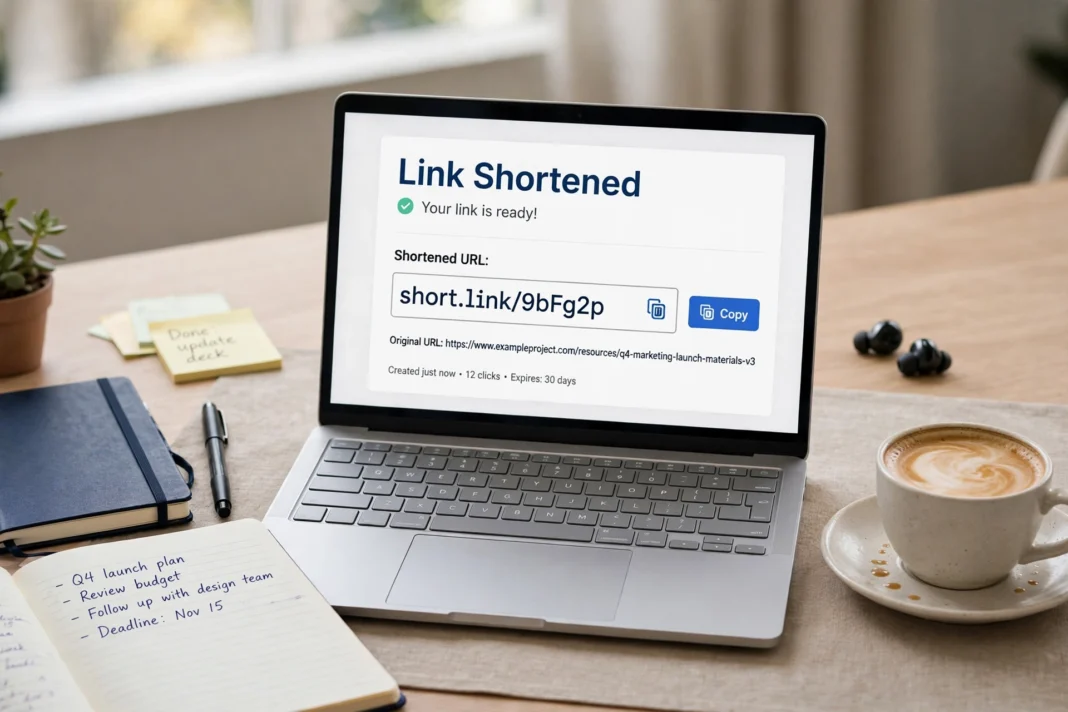
- How it is said to work: A long web address is turned into a short link. When someone clicks it, a brief advertisement appears before the destination page loads. The link owner is said to earn a share of the advertising revenue.
- Who it is aimed at: Bloggers, social media creators, affiliate marketers and anyone who already shares links with an audience.
- Earnings: No single rate is established. Guides quote very different figures, and those figures are estimates, not a published rate card.
- Trust signal: ScamAdviser is reported to give the site a 61 percent trust score, described as medium to low risk.
- Ownership: The company or person behind the platform is not publicly identified in the guides reviewed. This is unverified.
- Live homepage: A homepage read on 3 November 2026 found general blog articles rather than a visible link-shortening tool. That observation is dated and may have changed since.
- Best understood as: A small, supplementary earning tool for people who already share links — not a salary replacement, and not a full advertising platform in the sense of Google Ads or Meta Ads.
What Is Adswynk?
Adswynk is a name that turns up in two slightly different costumes, and the guides do not all agree on which one it wears. The most consistent description, found across several independent guides, is that Adswynk is a link-shortening and monetization platform. You paste in a long web address, the service hands you back a compact version, and whenever somebody clicks that compact link, a short advertisement appears for a few seconds before the visitor reaches the actual page. That ad view is what generates the money, and the link owner is said to receive a share of it.
This is different from an ordinary URL shortener. Services such as Bitly or TinyURL make links neat and trackable, but they do not pay you for clicks. Adswynk, as the guides describe it, adds a revenue layer on top of the shortening. The link creator becomes, in effect, a tiny publisher, and the advertiser pays for the few seconds of attention the interstitial ad commands.
Some guides present Adswynk differently, as a broader digital advertising platform for businesses, with talk of cross-channel campaigns, automation and dashboards. The two descriptions are not necessarily contradictory — a service can have both a publisher side and an advertiser side — but no guide reviewed here showed a working advertiser dashboard or a dated, platform-published feature list to settle the question. The link-monetization description is the more consistent one, so it is the one this article treats as the main meaning.
There is a third layer to the picture, and it matters most for anyone thinking of using it. A guide that checked the live homepage of adswynk.com on 3 November 2026 reported that the homepage carried the title “Digital Advertising & Marketing Solutions” and listed general blog articles — on productivity habits, digital detox, daycare, shower faucet parts, shopping for watches, deep reading, platinum as an asset and an accounting-tool comparison. No link-shortening tool, sign-up panel, rate card or payout page appeared in that homepage read. That does not prove no tool exists elsewhere on the domain, or that the domain never offered one, but the guide description and the current homepage do not obviously match. A reader who visits the site today should look at what is actually there rather than trusting any single guide.
Background: Where the Idea Comes From
The idea behind Adswynk is not new. Link monetization has been around for well over a decade. Services such as AdFly and Shorte.st built businesses on the same basic bargain: a visitor trades a few seconds of attention for free access to the page they wanted, the advertiser pays for that attention, and the link owner takes a cut. The model grew up alongside file-sharing forums, download sites and social media groups, where people were already passing links around in large numbers and looking for a way to make that activity pay.
Adswynk appears to belong to that same family, and to a newer wave of small platforms that arrived in the mid-2020s promising the same thing with a simpler interface and a lower barrier to entry. The guides that discuss it are mostly dated to 2025 and 2026, and the search interest around it — queries such as “Adswynk.com review”, “Adswynk.com legit or scam” and “Adswynk.com payment proof” — suggests it gained attention in 2026, particularly among UK users looking for flexible ways to earn extra income online. None of that establishes a founding date, a founding team or a company registration, and none of those details appear in the public guides reviewed here. The founding date of Adswynk is unverified, the founders are unverified, and the company behind it is unverified.
How Adswynk Works
As the guides describe it, using Adswynk follows a short chain of steps. First, you take a long web address — a blog post, a video, a product page, a news article — and paste it into the platform. The platform returns a short link in its place, and that short link is what you share: in a Telegram group, a WhatsApp chat, a social media post, a forum thread or an email newsletter.
Second, someone clicks your short link. Instead of going straight to the destination, they see a brief advertisement — an interstitial ad — for a few seconds. They may need to wait for a timer, or click a button, before the destination page loads. The guides describe this as the core of the model: the ad is the product, and the click is what the advertiser is buying.
Third, that ad view is counted, and the link owner earns a small amount for it. Payment is described as following a CPM or CPC model, which means income tracks impressions and valid clicks rather than the number of links created. CPM means cost per thousand impressions, and CPC means cost per click. A thousand genuine views from one country may pay differently from a thousand views from another, because advertisers value some audiences more than others. The guides consistently report that traffic from the United States, the United Kingdom and Canada is said to pay the most, with European traffic in the middle and traffic from some other regions paying less.
Fourth, earnings accumulate in an account balance, and the user is said to be able to withdraw once a minimum threshold is reached. The guides mention a minimum withdrawal threshold, but they do not agree on what it is, and no platform-published payout page was available in the research for this article to confirm it. The payment methods, the withdrawal threshold and the payout timing are all unverified as platform-published facts. On the other side, advertisers are said to pay Adswynk to display short promotions to the people clicking through. Whether the advertiser side is a live, self-serve system or something more limited is unverified, because no guide reviewed here demonstrated it working.
Earnings: What the Guides Say, and Why the Figures Disagree
If you read three guides about Adswynk, you will come away with three different ideas of what it pays, and that is not a small detail. It is the difference between a hobby that buys a coffee and a side income worth real time. So it is worth laying out the disagreement honestly rather than picking one number and presenting it as fact.
One guide puts the platform at roughly $0.45 to $4.50 per thousand impressions, and describes casual monthly earnings of $2 to $10 for mixed-audience sharing, with creators who have consistent, high-volume traffic from Western audiences possibly reaching $30 to $50 per month. The same guide labels its own figures as estimates based on typical CPM ranges for link-monetization platforms in 2026, and stresses that actual rates vary by advertiser demand and traffic quality.
Another guide quotes much higher figures: reported CPM of $10 to $30 per thousand impressions for United States, United Kingdom and Canadian traffic, $5 to $15 across Europe, and $1 to $3 for South Asian visitors, with mixed global traffic averaging $3 to $10. Those numbers, if true, would make the platform far more lucrative than the first guide suggests. But that guide also states plainly that no verified external audit exists, and its figures are presented as reported rather than confirmed.
A third set of guides avoids specific numbers altogether and speaks only in general terms: modest supplemental income, a secondary income stream, not a replacement for a salary. That caution is probably the most honest position available, because no guide in the research for this article showed a dated, platform-published rate card, and no audited payout record was found. Until a current platform page shows a rate, any figure should be treated as unconfirmed. The honest summary is this: Adswynk is described as paying something per thousand genuine clicks, with higher rates for Western traffic and lower rates elsewhere, and with casual users earning only a few dollars a month. The precise rates are unverified, the minimum withdrawal threshold is unverified, and the long-term payout record is unverified.
Who Adswynk Is For
The guides are consistent about the audience, even where they disagree about the money. Adswynk is aimed at people who already share links with a steady audience and want to turn that existing habit into a small income with almost no setup cost. Bloggers are the most obvious group: a blogger who publishes a post and shares it across social media is already creating the clicks that a link-monetization service needs, and shortening the link through a service like Adswynk adds a revenue step without changing the underlying activity. Social media creators are in the same position, as are forum posters, community moderators and people who run Telegram or WhatsApp groups where links are shared daily. Affiliate marketers, who already live and die by link clicks, are another natural fit.
What Adswynk is not for, according to the same guides, is equally clear. For a business chasing lead generation, search rankings or measurable return on investment from content marketing, it is the wrong tool. It does not build or manage an advertising campaign, it does not target a specific audience, and it does not provide the reporting depth of an established ad network. A small business that wants to advertise should look at the established platforms instead. And for anyone looking for a full-time income, the guides are unanimous: this is a supplementary stream at best, and the time required to earn meaningful amounts would be better spent elsewhere. There is also a question of audience tolerance. Every interstitial ad is a small tax on the person who clicked your link, and audiences notice when their links start making them wait. A creator who monetizes every link may find that fewer people click at all.
Public Presence and Relevance
Adswynk does not have the public footprint of an established advertising company. There is no widely cited press coverage, no verified company profile, and few verified user reviews on platforms such as Trustpilot or Reddit, according to the guides. Low review volume does not confirm a scam, but it does limit trust, because there are fewer independent voices to check any claim against. What does exist is a cluster of third-party guides and review pages, mostly published in 2025 and 2026, and a pattern of search queries that shows people are actively trying to work out whether the platform is legitimate, whether it pays, and whether it is safe. That pattern of curiosity is itself a sign of relevance: people do not search for payment proof for a service nobody has heard of. The interest appears strongest among UK users exploring flexible online earning, and among bloggers and creators in general.
The trust signals that reviewers do report are mixed but not damning. ScamAdviser is reported to give the site a 61 percent trust score, described as medium to low risk and tagged as probably legitimate. The domain is reported to have valid SSL security, which covers basic data transmission, and no malware alerts. On the other hand, reviewers note that the domain is relatively young, uses privacy-protected registration data, and sits on shared hosting. None of those are proof of fraud — many legitimate small sites share those traits — but reviewers treat them as signs of an early-stage operation, and they are worth knowing.
User experiences, as reported in the guides, are mixed. Some users are said to report smooth payments. Others note delays, or difficulty reaching customer support, or difficulty verifying how their payout was calculated. Payment proof is often shared in the form of screenshots or testimonials, but independently verified proof is limited, which makes it difficult to confirm long-term reliability. One reviewer put the central concern well: the biggest question is not whether a platform pays once, but whether it maintains consistent payouts over time. That question, for Adswynk, is unverified.
For general background on how advertising and link sharing work online, Wikipedia (https://www.wikipedia.org/) is a useful starting point, and readers who want to compare Adswynk with the wider world of online publishing can find more discussion on the Cornovaglia homepage (https://cornovaglia.uk/).
What Is Not Verified About Adswynk
This section matters more than most, because the internet is full of confident claims about Adswynk that do not survive a second look. Everything below is either unverified or directly contradicted by another source, and this article does not present any of it as settled fact.
The founding date is unverified. No guide reviewed here gives a founding date that can be checked against a company record or a dated platform announcement. Any article that states a founding year for Adswynk as fact is guessing. The founders and the owning company are unverified. The guides describe ownership, company registration and long-term payout history as thin or undisclosed, and no named founder or registered company appears in the sources reviewed.
The earning rates are unverified. Guides quote figures that differ by an order of magnitude, one guide labels its own figures as estimates, and no dated, platform-published rate card was found. No specific CPM, CPC or monthly earning figure in this article should be treated as guaranteed. The minimum withdrawal threshold, the payment methods and the payout timing are unverified. Guides mention a threshold but do not agree on it, and no platform-published payout page was available to confirm any of them.
The long-term payout record is unverified. Some users are reported to have been paid, and some are reported to have experienced delays, but there is no audited payout record and no independently verified proof of consistent, long-term payments. The advertiser side of the platform is unverified. Some guides describe Adswynk as a full advertising platform for businesses, with campaign tools and dashboards, but no guide reviewed here demonstrated a working advertiser system.
Finally, the live state of the platform is unverified beyond a dated homepage read. A homepage check on 3 November 2026 found general blog articles and no visible link-shortening tool, but a homepage read shows what the homepage presented on that date. It does not prove that no tool exists elsewhere on the domain, or that the domain never offered one, and the site may have changed since that check.
Frequently Asked Questions About Adswynk
What is Adswynk? Adswynk is described by third-party guides as a link-shortening and monetization platform. A long web address is turned into a short link, a visitor who clicks that link sees a brief advertisement before reaching the destination, and the link owner is said to receive a share of the advertising revenue. Some guides also describe it as a digital advertising platform for businesses, but the link-monetization description is the more consistent one.
How does Adswynk work? As described in the guides, you paste a long URL into the platform, receive a short link, and share it with your audience. When someone clicks, an interstitial ad appears for a few seconds before the destination page loads. That ad view is counted, and the link owner earns a small amount per valid click or per thousand impressions. The precise mechanics, rates and payout process are unverified as platform-published facts.
Is Adswynk legit? Adswynk is not categorized as a scam in the guides reviewed, and ScamAdviser is reported to give the site a 61 percent trust score, described as medium to low risk. At the same time, reviewers note limited transparency about ownership, few verified payment proofs and mixed user reports about withdrawals. The honest answer is that it is not flagged as fraudulent, but its long-term credibility is still unproven, and anyone considering it should test it cautiously.
How much can you earn with Adswynk? No reliable figure exists. Guides quote very different rates, from under a dollar to tens of dollars per thousand impressions, and one guide labels its own figures as estimates. Casual users are described as earning a few dollars a month, with higher amounts only for consistent, high-volume traffic from Western audiences. No earning figure should be treated as guaranteed, and the platform should be treated as a supplementary income stream at most.
Do you need a website to use Adswynk? No, according to the guides. No blog or personal website is needed, and no approval from a large ad company is required. You shorten a URL and share it on any platform — social media, forums, messaging apps or email newsletters. That low barrier is part of the appeal, and part of the reason the quality of the traffic you send matters so much.
What are the alternatives to Adswynk? The guides name older link-monetization services such as Shorte.st, AdFly and Shrinkme.io as alternatives in the same space. For advertising rather than link monetization, the established platforms are Google Ads, Meta Ads and large ad networks such as Google AdSense or PropellerAds, which offer far more transparency and reporting, but also higher barriers to entry. Which one fits depends on whether you want to earn from links you already share or run proper advertising campaigns.
Conclusion
Adswynk is a small, ambiguous name in a corner of the internet where small, ambiguous names are common. The most credible description, repeated across several independent guides, is that it is a link-shortening service with an advertising layer: you share a short link, your audience sees a brief ad, and you earn a small share of the revenue. That model is real, it has existed for years, and it can work in a modest way for people who already share links with a steady audience.
But the details that would let a reader trust it fully are missing. The company behind it is not publicly identified, the earning rates quoted by different guides disagree sharply, no platform-published rate card or audited payout record was found, and a recent homepage read showed general blog articles rather than a visible shortening tool. The trust score reported by ScamAdviser, 61 percent, is neither a clean bill of health nor a warning to stay away. It is, like the rest of the picture, somewhere in the middle.