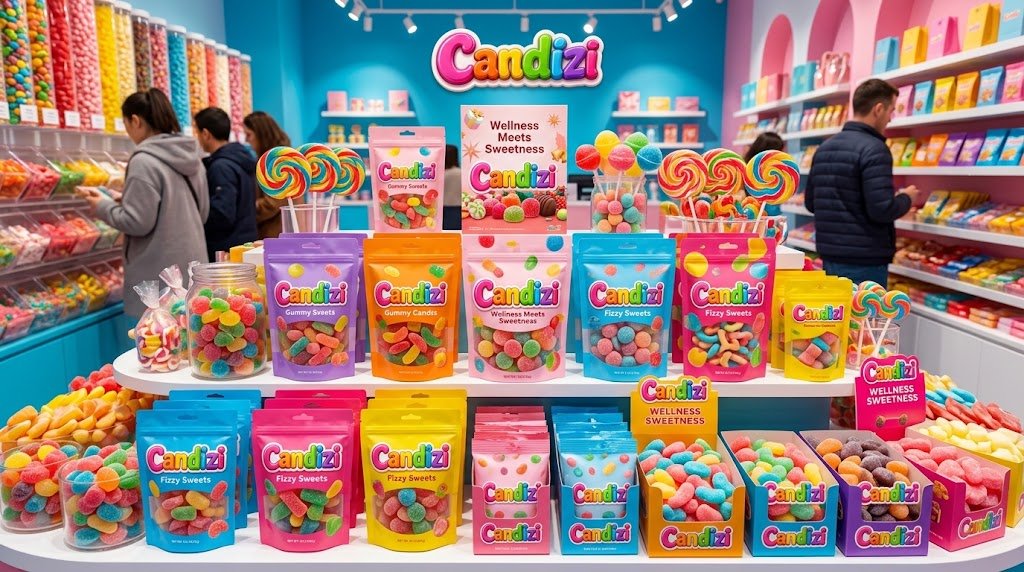

Candizi is one of those terms that looks familiar before you actually know what it means. Search for it, and the picture quickly becomes complicated. You may encounter a wellness supplement, candy-style functional product, lifestyle idea, digital platform, or simply a modern brand name.
That ambiguity isn’t a minor detail. It is arguably the most important fact to understand about Candizi.
Current online sources do not consistently describe one standardized product, ingredient, technology, or established scientific concept under this name. Instead, the term has accumulated several meanings, making context essential whenever you see it on a product page, website, social post, or advertisement.
This guide separates what can reasonably be established from what remains marketing, interpretation, or speculation.
What Is Candizi?
Candizi is an emerging, non-standardized term used online in several different contexts, particularly wellness, functional treats, lifestyle branding, digital experiences, and consumer products.
There is currently no universally accepted definition comparable to established terms such as “probiotic,” “multivitamin,” or “loyalty platform.” Recent coverage similarly notes that the word lacks a single recognized medical, nutritional, or linguistic definition.
Depending on where you encounter the term, it may refer to:
- A wellness or supplement-style product
- Gummies, chews, drinks, powders, or other functional-food formats
- Candy and boutique confectionery concepts
- A lifestyle or self-care identity
- A digital engagement or personalization concept
- A distinctive name used for branding or online projects
That means asking “What does Candizi do?” before identifying the specific product or service can lead to the wrong answer.
A better first question is: Which Candizi am I looking at?
Why Is Candizi Difficult to Define?
Most established consumer categories work in the opposite direction. The category comes first, followed by competing brands. “Protein powder,” for example, describes a recognizable product type regardless of manufacturer.
Here, the name appears to have spread before a single definition became dominant.
Some current websites describe Candizi primarily through wellness and functional nutrition. Others connect the word to confectionery, while a separate cluster treats it as a digital lifestyle, engagement, personalization, or branding concept.
This creates search-intent collision: people typing the exact same query may be looking for completely different things.
The Four Main Interpretations
| Interpretation | What the term may describe | What you should verify |
|---|---|---|
| Wellness | Supplement or functional wellness product | Ingredients, dosage, manufacturer, evidence |
| Food | Gummies, candy, chews or confectionery | Nutrition facts, allergens, sugar content |
| Digital | Engagement, rewards or personalization concept | Official platform, privacy terms, ownership |
| Branding | Coined lifestyle or creative name | Company identity, trademark and context |
The table highlights why broad statements about the term should be treated cautiously.
Candizi and the Wellness Trend
Wellness appears to be one of the most visible interpretations in recent search results.
Several publishers associate Candizi with convenient wellness formats such as gummies, flavored mixes, chews, drinks, capsules, vitamins, botanicals, or other functional ingredients. The descriptions are inconsistent, however, and should not be interpreted as proof that every product carrying the name contains those ingredients.
The broader idea makes commercial sense.
Consumers often want health products that fit easily into everyday routines. That demand has helped create a huge market for flavored supplements, functional beverages, fortified foods, gummies, powders, and similar products.
But convenience and effectiveness are different questions.
Potential Benefits vs. Proven Benefits
This distinction matters enormously.
Online articles associate the name with claims involving energy, focus, digestion, stress management, immunity, and general wellness. Yet the existence of those claims does not establish that a particular formulation produces those outcomes.
A product’s effects depend on variables such as:
- Its actual ingredients
- The quantity of each ingredient
- Bioavailability
- Frequency of use
- Quality and manufacturing standards
- The consumer’s diet and circumstances
- Whether credible research supports the specific formulation
A flashy wellness label cannot replace this information.
If a seller promotes a Candizi product without showing an ingredient list, serving size, manufacturer information, warnings, or evidence behind specific health promises, consider that a reason to investigate rather than a reason to buy.
Is Candizi a Supplement, Candy, or Functional Food?
Potentially any of them, depending on the source.
One interpretation treats the term as an umbrella for enjoyable supplement formats. Another associates it more literally with visually distinctive confectionery, including gummies, unusual flavors, customized sweets, and candy experiences designed for social sharing.
These categories should not be blurred.
A supplement is not automatically a healthy candy, and candy does not become nutritionally beneficial merely because it contains a fashionable botanical or vitamin.
Check the Product, Not the Name
When evaluating something marketed as Candizi, ignore the front of the package for a moment and examine the factual information.
Look for:
- Complete ingredient list
- Serving size and recommended use
- Nutrient or supplement quantities
- Added sugar or sweeteners
- Allergy information
- Manufacturer or responsible company
- Country of manufacture
- Batch or lot information where applicable
- Storage instructions
- Appropriate warnings
- Expiration or best-before date
These details tell you substantially more than branding does.
What Ingredients Are Associated With Candizi?
There is no responsible way to provide one universal ingredient list because no standardized formulation has been established across the different uses of the term.
That point is critical.
Some online wellness descriptions mention vitamins, minerals, antioxidants, plant-derived nutrients, botanicals, and adaptogen-style ingredients. Those references describe what particular websites associate with the concept; they do not establish an official formula.
Therefore, never assume two similarly named products are interchangeable.
Why Ingredient Dose Matters
Finding a recognizable ingredient on a label is only the beginning.
Suppose a gummy advertises a fashionable botanical prominently on the front. Without knowing how much is actually present, the marketing claim tells you little about whether the amount resembles quantities studied in credible research.
This is a common consumer blind spot.
Ingredient identity + dose + formulation + evidence provide a much stronger basis for evaluation than ingredient identity alone.
How to Evaluate Candizi Wellness Claims
The most useful skill isn’t memorizing a list of promised benefits. It is learning how to test those promises.
1. Identify the Exact Claim
“Supports wellness” is vague.
“Improves memory by 40%” is measurable and demands considerably stronger evidence. The more precise a health claim becomes, the more evidence you should expect behind it.
2. Find the Active Ingredients
Determine which ingredient supposedly creates the claimed effect.
If the company cannot explain the relationship between its formulation and its promises, the claim deserves skepticism.
3. Check the Dose
Research on an ingredient does not automatically validate every product containing it.
Compare the amount used in relevant research with the quantity actually supplied per serving whenever reliable data are available.
4. Distinguish Ingredient Research From Product Research
This is an especially important distinction for Candizi or any emerging wellness product.
A study showing an effect for ingredient X does not necessarily prove that a finished product containing ingredient X will produce the same result. Different dosages, ingredient combinations, populations, manufacturing methods, and study conditions can change outcomes.
5. Watch for Medical-Sounding Marketing
Be cautious when promotional content implies that a food or general wellness product can diagnose, prevent, treat, or cure disease without appropriate evidence and regulatory standing.
A polished website is not clinical evidence.
Is Candizi Safe?
There is no meaningful universal yes-or-no answer because Candizi does not currently represent one standardized formulation across the web.
Safety has to be evaluated at product level.
A simple confectionery product, vitamin gummy, herbal formulation, and unknown online supplement present very different considerations.
Who Should Be Especially Careful?
Extra caution is sensible for people who:
- Take prescription medicines
- Use multiple supplements simultaneously
- Have known food allergies
- Are pregnant or breastfeeding
- Are purchasing products for children
- Have an existing health condition
- Are sensitive to caffeine, stimulants, or particular botanicals
If a product contains biologically active ingredients and you are unsure whether they are appropriate for you, a qualified healthcare professional or pharmacist can assess the actual formulation and possible interactions.
That is more useful than relying on generic testimonials.
Candizi as a Digital and Lifestyle Concept
Health isn’t the only interpretation.
Some publications describe Candizi as a digital engagement ecosystem involving personalization, rewards, gamification, consumer interactions, or product discovery. Other articles treat it more loosely as a flexible identity spanning branding, creativity, and internet culture.
These descriptions need the same fact-checking discipline as wellness claims.
Repeated statements across blogs don’t automatically establish the existence, specifications, or functionality of one official platform.
Questions to Ask About a Digital Candizi Service
If you encounter a website or app using the name, check:
- Who owns and operates it?
- Is there a clear company identity?
- What does the privacy policy say?
- What information does it collect?
- Are rewards genuine and redeemable?
- Are important terms publicly accessible?
- How can users delete an account or data?
- Is customer support identifiable?
- Are reviews available outside the company’s own website?
This becomes particularly important when a service asks for personal information, payment details, permissions, or account connections.
Why the Name Works So Well for Branding
There is another reason the term keeps appearing: it is highly brandable.
“Candizi” sounds somewhat reminiscent of candy, giving it playful, sweet, colorful associations. At the same time, its unusual ending makes it distinctive enough to work as a modern product or digital identity.
That combination gives marketers flexibility.
The name could plausibly sit on packaging for gummies, a confectionery business, wellness products, an app, a lifestyle website, or a creative project without immediately feeling out of place.
This versatility may also explain the confusing search results. A memorable coined word can acquire multiple independent interpretations when no established definition controls its use.
How to Tell Whether a Candizi Website or Product Is Credible
Search visibility should never be confused with authority.
For an unfamiliar product, use a simple five-layer credibility check.
Identity
Can you determine who is responsible for the product or website?
Anonymous health claims deserve more scrutiny than information published by an identifiable organization with relevant expertise.
Transparency
A credible seller should make essential details easy to find rather than forcing shoppers to hunt for them.
That includes ingredients, pricing, contact details, policies, and important warnings.
Evidence
Ask whether the evidence supports the actual claim.
References to “science,” “ancient wisdom,” or “clinically studied ingredients” are not substitutes for transparent supporting evidence.
Independent Verification
Look beyond the seller’s own testimonials.
Independent testing, credible professional analysis, transparent regulatory information, and verifiable customer experiences can provide a more balanced picture.
Marketing Pressure
Be wary of combinations such as:
- Miracle-style promises
- Guaranteed health outcomes
- Fake-looking countdown timers
- Unclear subscription terms
- Claims that one product solves numerous unrelated problems
- No meaningful ingredient quantities
- Testimonials presented as scientific proof
One warning sign doesn’t necessarily prove a product is poor. Several together should make you considerably more cautious.
Candizi vs. Traditional Supplements
If you encounter the term in a wellness context, the following comparison can help frame the buying decision.
| Factor | Candizi-style wellness product | Traditional supplement |
|---|---|---|
| Format | May emphasize gummies, chews or flavored products | Often tablets, capsules or powders |
| User experience | Convenience and taste may be prominent | Usually function-focused |
| Formula | Depends entirely on the specific product | Depends on manufacturer |
| Evidence | Must be checked product by product | Must also be checked individually |
| Sugar/calories | May matter in candy-like formats | Often lower in capsules/tablets |
| Main concern | Marketing can obscure formulation details | Similar risk with poorly documented products |
Neither category is inherently superior.
The best choice is the one with an appropriate formulation, transparent labeling, sensible dosage, credible manufacturing, and a genuine reason for use.
What Makes Candizi Interesting in 2026?
The real story may be less about one product and more about how modern internet terminology develops.
Current search results show the name being attached to wellness, functional foods, confectionery, digital engagement, personalization, branding, and lifestyle culture.
That makes the term a useful example of something increasingly common online: a keyword can become visible before its meaning becomes stable.
Content then multiplies around it.
One website interprets the term. Another repeats or expands that interpretation. Soon, readers can encounter dozens of apparently confident explanations even though the underlying concept remains poorly documented.
This is exactly where source verification becomes more important than content volume.
How to Research Candizi Before Buying Anything
If your search has commercial intent, use this process before spending money.
- Identify the exact product or website. Don’t rely on the name alone.
- Find the company behind it. Check ownership and legitimate contact information.
- Read the complete label. Focus on ingredients and quantities rather than headlines.
- Investigate individual claims. Look for credible evidence supporting the relevant ingredient at the relevant dose.
- Check purchasing terms. Understand shipping, returns, subscriptions, and refunds.
- Look for independent information. Don’t make the seller’s website your only source.
- Consider your own circumstances. Allergies, medicines, age, pregnancy, and existing conditions can affect suitability.
This seven-step check takes a few minutes and can eliminate much of the uncertainty surrounding unfamiliar wellness products.
Frequently Asked Questions About Candizi
What does Candizi mean?
Candizi does not currently have one universally established meaning. Online, the term appears in wellness, functional-food, confectionery, digital-platform, lifestyle, and branding contexts. The correct interpretation therefore depends on the specific website, product, or conversation in which you encounter it.
Is Candizi a real wellness supplement?
Some websites use the name in connection with supplements and functional wellness products, but that does not establish one universal formulation. Before purchasing anything advertised under the name, verify the actual manufacturer, ingredients, dosage, labeling, and claims rather than assuming all products are identical.
What are the benefits of Candizi?
There is no universal list of scientifically established benefits applicable to everything using the name. Online wellness content associates it with areas such as energy, digestion, focus, stress support, and general well-being, but those claims need to be evaluated against the ingredients, dosage, formulation, and available evidence for the specific product.
Is Candizi safe to use every day?
That depends entirely on what the specific product contains, how much is taken, and the individual using it. Check the label and recommended serving carefully, and seek professional advice when medicines, pregnancy, existing medical conditions, allergies, children, or unfamiliar active ingredients are involved.
Is Candizi also a digital platform?
Some online publications describe the term as a digital lifestyle, rewards, personalization, or engagement ecosystem. However, because web descriptions vary substantially, users should verify the exact service, operator, functionality, privacy policy, and terms instead of assuming every reference points to one established platform.
Final Takeaway: Understand the Context Before Trusting the Claim
Candizi is best approached as an emerging and context-dependent term, not a single universally defined product or technology.
That distinction clears up most of the confusion.
If you find it attached to a wellness product, evaluate the ingredients, dosage, manufacturer, safety information, and evidence. If it describes candy or functional food, examine the nutrition and ingredient information. If it appears on a digital platform, investigate ownership, privacy, security, and terms.
Most importantly, don’t allow repetition across search results to substitute for verification.
The smartest next step is simple: identify the exact Candizi product, website, or service you are considering, then evaluate what it actually provides rather than what the name has come to imply online.