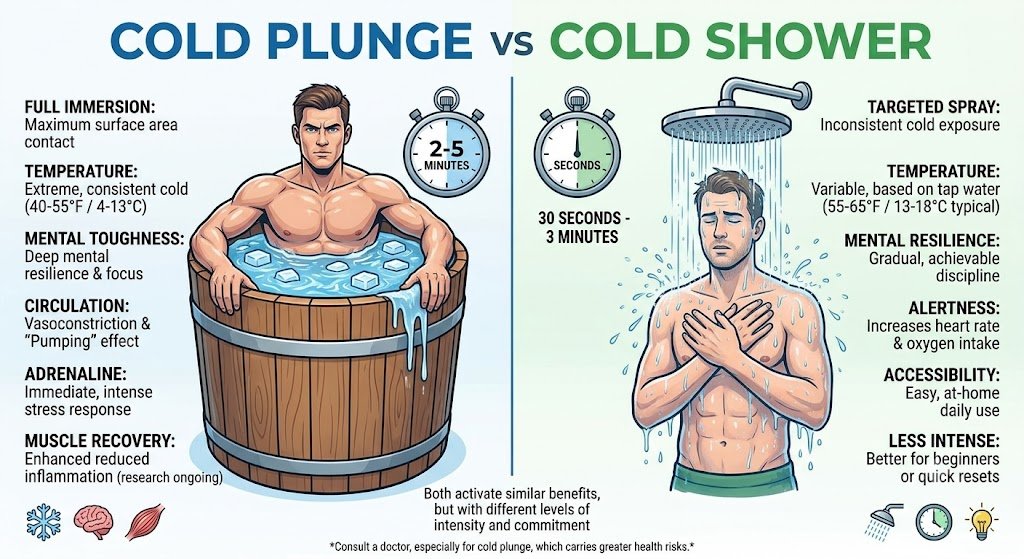

Cold plunge vs cold shower is one of the most common comparisons people make when exploring cold-water therapy. Both methods expose the body to cold temperatures, but they differ significantly in intensity, duration, physiological effects, convenience, and intended use.
If your goal is faster muscle recovery, better mental resilience, improved circulation, or simply feeling more energized, understanding these differences can help you choose the right approach. While both techniques activate similar biological responses, a full-body immersion in cold water creates much stronger effects than standing under a cold shower.
This article explains how each method works, compares their benefits and drawbacks, examines the current scientific evidence, and helps you decide which option best fits your health, fitness, and lifestyle.
Health Disclaimer: Cold-water therapy is not appropriate for everyone. People with cardiovascular disease, uncontrolled high blood pressure, Raynaud’s phenomenon, certain respiratory conditions, or other medical concerns should consult a qualified healthcare professional before attempting cold exposure.
Cold Plunge vs Cold Shower at a Glance
| Feature | Cold Plunge | Cold Shower |
|---|---|---|
| Water Temperature | Usually 10–15°C (50–59°F) | Often 15–24°C (59–75°F), depending on plumbing |
| Body Coverage | Full body immersion | Mostly flowing water over body |
| Cooling Speed | Very rapid | More gradual |
| Recovery Effect | Strong | Moderate |
| Convenience | Requires tub or plunge setup | Available in most homes |
| Cost | Medium to high | Very low |
| Time Required | 2–10 minutes | 3–10 minutes |
| Intensity | High | Moderate |
| Best For | Athletes, recovery, experienced users | Beginners, daily wellness |
Understanding Cold Water Therapy
Cold water therapy refers to exposing the body to cold water for a short period to trigger natural physiological responses. It has been practiced for centuries in different cultures and is now widely used in sports medicine, wellness routines, and rehabilitation.
When cold water contacts the skin, the body immediately begins conserving heat. Blood vessels near the skin narrow, heart rate initially rises, breathing becomes faster, and the nervous system becomes highly activated.
After leaving the cold environment, blood vessels reopen and circulation gradually returns to normal. Researchers continue studying how these responses influence recovery, inflammation, mood, metabolism, and overall health.
What Is a Cold Plunge?
A cold plunge involves immersing most or all of the body in cold water for several minutes.
Typical cold plunge temperatures range from:
- 10–15°C (50–59°F)
- Some experienced users go colder
- Competitive athletes sometimes use ice baths around 8–10°C
Unlike showers, nearly the entire body experiences cold exposure simultaneously. This rapid cooling places a much stronger demand on the body’s thermoregulation system.
Cold plunges may be performed in:
- Dedicated cold plunge tubs
- Ice baths
- Natural lakes
- Cold rivers
- Recovery centers
- Contrast therapy facilities
How a Cold Plunge Affects the Body
Within seconds of immersion, several changes occur:
Blood Vessel Constriction
Peripheral blood vessels narrow to reduce heat loss. This redirects blood toward the body’s core.
Nervous System Activation
Cold receptors rapidly stimulate the sympathetic nervous system, increasing alertness and triggering the release of stress-related hormones such as norepinephrine.
Reduced Muscle Temperature
Muscle tissues cool significantly faster than during a shower, which is one reason athletes frequently use cold immersion after strenuous exercise.
Perceived Recovery
Many users report reduced soreness and improved feelings of recovery following intense training sessions.
What Is a Cold Shower?
A cold shower involves bathing under cold running water without full immersion.
Although the temperature may feel uncomfortable, showers usually produce less intense cooling because:
- Water constantly moves
- Parts of the body are briefly out of direct water
- Core temperature falls more slowly
- Air surrounding the body reduces cooling efficiency
For these reasons, cold showers provide a gentler introduction to cold exposure.
How Cold Showers Affect the Body
Cold showers stimulate many of the same responses seen with cold plunges:
- Increased alertness
- Faster breathing
- Temporary increase in heart rate
- Improved wakefulness
- Nervous system activation
However, the effects are generally less pronounced because total body cooling is lower.
Many people find daily cold showers easier to maintain than regular cold plunges.
Cold Plunge vs Cold Shower: Key Differences Explained
Although both involve cold water, they should not be viewed as interchangeable.
1. Intensity
Cold plunges expose nearly the entire body at once.
The hydrostatic pressure of immersion combined with continuous cold contact creates a much stronger stimulus than water flowing from above.
Cold showers are intense initially but usually become easier after the first minute.
Winner: Cold plunge
2. Muscle Recovery
Research on cold-water immersion suggests it may reduce delayed onset muscle soreness (DOMS) after intense exercise.
This appears especially helpful following:
- Long-distance running
- High-volume strength training
- Tournament sports
- Repeated competitions
Cold showers may offer mild recovery benefits but generally cool muscles less effectively.
Winner: Cold plunge
3. Convenience
Most homes already have showers.
Cold plunges may require:
- Ice
- Dedicated tubs
- Water maintenance
- Outdoor setup
- Additional space
For everyday consistency, showers are much simpler.
Winner: Cold shower
4. Cost
Cold showers cost virtually nothing beyond normal water usage.
Cold plunges may involve purchasing:
- Ice
- Recovery tubs
- Chillers
- Water filtration systems
- Maintenance equipment
Premium plunge systems can cost hundreds or even thousands of dollars.
Winner: Cold shower
5. Mental Challenge
Many experienced users describe entering an ice bath as psychologically demanding.
Remaining calm while immersed requires controlled breathing and mental discipline.
Cold showers also build resilience, but many people find them easier because they can step out instantly.
Winner: Cold plunge
6. Daily Practicality
If your goal is building a sustainable routine, cold showers fit more naturally into everyday life.
Most people can add one to their morning or post-workout routine without buying additional equipment.
Winner: Cold shower
Potential Benefits of Cold Plunges
Although research is ongoing, studies suggest cold-water immersion may provide several potential benefits under appropriate conditions.
Faster Recovery After Exercise
This remains the strongest evidence-supported use.
Athletes often use cold immersion after:
- Heavy resistance training
- Football matches
- Marathon events
- Cycling competitions
- High-intensity interval training
Reduced soreness may allow athletes to train comfortably sooner.
Temporary Reduction in Inflammation
Cold exposure narrows blood vessels and reduces local blood flow during immersion.
This may temporarily decrease swelling following strenuous exercise.
However, inflammation also plays a role in muscle adaptation. Using cold plunges immediately after every strength workout may slightly reduce long-term muscle growth in some situations.
Timing therefore matters.
Increased Alertness
Many people experience:
- Greater wakefulness
- Improved concentration
- Reduced sleepiness
These effects are thought to result partly from activation of the nervous system.
Mood Enhancement
Some people report improved mood after cold exposure.
Possible reasons include:
- Release of norepinephrine
- Increased endorphin activity
- Sense of accomplishment
- Controlled breathing
Research is still evolving, and cold therapy should not be considered a treatment for mental health disorders without medical guidance.
Potential Benefits of Cold Showers
Cold showers provide many of the same advantages, although usually to a lesser degree.
Easy Habit Formation
Consistency often matters more than intensity.
A two-minute cold shower every morning may become a sustainable routine for years.
Improved Wakefulness
Many people replace caffeine with a cold shower because it rapidly reduces feelings of grogginess.
While it does not replace sleep, it may temporarily increase alertness.
Lower Barrier to Entry
Beginners often find cold showers far less intimidating than ice baths.
Gradually increasing exposure helps many people become comfortable with colder temperatures over time.
Budget-Friendly Wellness Practice
No expensive equipment is necessary.
For people curious about cold exposure, showers provide an inexpensive starting point before investing in dedicated plunge systems.
What Does Scientific Research Say?
Research into cold-water therapy has expanded considerably over the past decade, particularly in sports science and exercise physiology.
Current evidence suggests that cold-water immersion is most consistently supported for reducing post-exercise muscle soreness and improving perceived recovery, especially after intense or repeated bouts of exercise. Many athletes report feeling ready to train again sooner after using a cold plunge, although the degree of benefit varies based on workout type, water temperature, immersion time, and individual response.
Scientists are also investigating how cold exposure affects metabolism, immune function, mental well-being, sleep quality, and long-term cardiovascular health. Some findings are promising, but many of these areas still require larger, high-quality clinical studies before firm conclusions can be drawn.
One important point often overlooked is that more cold is not always better. Extremely cold temperatures or prolonged exposure do not necessarily produce greater health benefits and can increase safety risks.