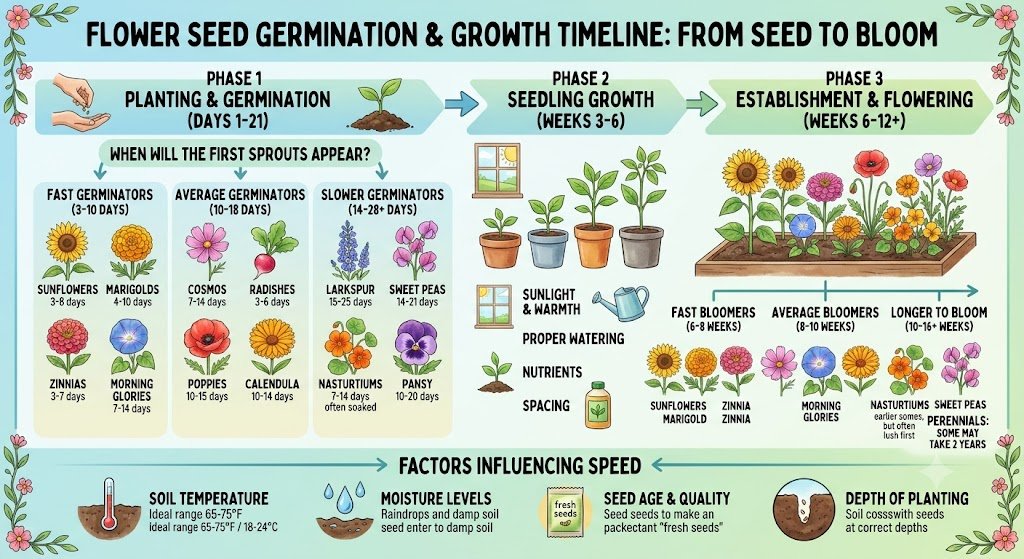

Growing flowers from seed is one of the most rewarding ways to start a garden, but one question comes up more than any other: how long do flower seeds take to grow? The answer depends on the type of flower, growing conditions, and what you mean by “grow.” Some seeds sprout in less than a week, while others may take several weeks to germinate and several months before producing their first blooms.
Most flower seeds germinate within 5 to 21 days, while many annual flowers bloom 8 to 12 weeks after planting. Perennial flowers often require several months—or even a full year—before flowering because they spend their first season developing strong roots.
This article explains realistic timelines for different flower types, what affects seed growth, how to speed up germination naturally, and what to expect from planting day to full bloom.
Understanding the Different Stages of Flower Seed Growth
Before looking at timelines, it’s important to understand that “growth” happens in several stages.
- Seed absorbs water (imbibition)
- Germination begins
- Seedling emerges above the soil
- True leaves develop
- Plant establishes roots and foliage
- Flower buds form
- Flowers bloom
- Seeds develop for the next generation
Each stage takes time, and the total growing period varies depending on the species.
Average Timeline: How Long Do Flower Seeds Take to Grow?
The table below shows typical timelines under good growing conditions.
| Growth Stage | Typical Time |
|---|---|
| Seed absorbs water | 12–48 hours |
| Germination | 5–21 days |
| Seedling emergence | 1–3 weeks |
| First true leaves | 2–4 weeks |
| Strong vegetative growth | 4–8 weeks |
| Flower bud formation | 6–12 weeks |
| First blooms (annuals) | 8–12 weeks |
| First blooms (perennials) | 3 months to over 1 year |
These are averages rather than guarantees. Weather, soil temperature, moisture, and seed quality all influence the schedule.
Germination Time for Popular Flower Seeds
Different flower species grow at different speeds.
| Flower | Germination | First Flowers |
|---|---|---|
| Marigold | 4–7 days | 8–10 weeks |
| Zinnia | 5–7 days | 6–8 weeks |
| Cosmos | 7–10 days | 8–10 weeks |
| Sunflower | 7–10 days | 10–12 weeks |
| Nasturtium | 7–14 days | 6–8 weeks |
| Petunia | 7–14 days | 10–12 weeks |
| Sweet Alyssum | 5–10 days | 6–8 weeks |
| Pansy | 10–20 days | 12–15 weeks |
| Snapdragon | 10–20 days | 12–16 weeks |
| Lavender | 14–28 days | Often second year |
| Coneflower | 10–20 days | Second growing season |
| Hollyhock | 10–21 days | Usually second year |
As the table shows, fast-growing annual flowers usually bloom during their first season, while many perennial flowers invest more time in root development before flowering.
Why Some Flower Seeds Grow Faster Than Others
Several biological and environmental factors influence growth speed.
Seed Genetics
Every flower species has its own natural life cycle. Fast-growing annuals are genetically programmed to germinate, flower, produce seeds, and complete their life cycle within one season.
Perennials grow more slowly because they are designed to survive for many years.
Soil Temperature
Temperature is one of the biggest influences on germination.
Most flower seeds germinate best between:
- 65°F–75°F (18°C–24°C)
If soil is colder than recommended:
- Germination slows dramatically.
- Some seeds remain dormant.
- Fungal diseases become more likely.
Excessively warm soil can also reduce germination for cool-season flowers.
Moisture
Seeds need consistent moisture to activate enzymes that start growth.
The soil should be:
- Evenly moist
- Never waterlogged
- Never allowed to dry completely
Too much water removes oxygen from the soil and may cause seeds to rot before they sprout.
Light Requirements
Many gardeners don’t realize that flower seeds have different light preferences.
Some seeds germinate best when covered with soil.
Examples include:
- Sunflowers
- Nasturtiums
- Marigolds
Others require light and should barely be covered.
Examples include:
- Petunias
- Begonias
- Lobelia
Planting light-dependent seeds too deeply is a common reason for poor germination.
Seed Age
Fresh seeds generally germinate more quickly than old ones.
Over time:
- Germination rates decline.
- Growth becomes uneven.
- Some seeds never sprout.
Proper storage in a cool, dry place helps maintain viability.
Annual vs Perennial Flowers: Growth Differences
Many gardeners expect every flower to bloom in its first year, but that’s not always realistic.
Annual Flowers
Annual flowers complete their entire life cycle in one growing season.
Examples include:
- Marigolds
- Zinnias
- Cosmos
- Sunflowers
- Calendula
Most annuals flower within 2 to 3 months after sowing.
Advantages
- Quick blooms
- Easy for beginners
- Long flowering season
- Ideal for containers and borders
Perennial Flowers
Perennials live for multiple years.
During the first season they often focus on:
- Building roots
- Developing crowns
- Producing healthy foliage
Flowering may occur in the second year instead.
Common examples include:
- Lavender
- Coneflower
- Delphinium
- Lupine
- Black-eyed Susan
This slower development often results in stronger, longer-lived plants.
Indoor vs Outdoor Growing Time
Starting seeds indoors usually shortens the wait for flowers.
| Growing Method | Typical Result |
|---|---|
| Direct sow outdoors | Dependent on weather and soil temperature |
| Indoor seed starting | Earlier germination and earlier blooms |
| Greenhouse growing | Most consistent growth |
| Heated propagation trays | Fastest germination under controlled conditions |
Indoor growing allows gardeners to begin several weeks before the last expected frost, giving plants a head start once they are transplanted outdoors.
What Happens During Germination?
Although nothing may appear above the soil for several days, a great deal of activity is happening beneath the surface.
Stage 1: Water Absorption
The dry seed absorbs moisture and swells.
Stage 2: Enzyme Activation
Stored food inside the seed begins converting into usable energy.
Stage 3: Root Emergence
The first root, called the radicle, pushes downward into the soil.
Stage 4: Shoot Development
The stem grows upward toward light.
Stage 5: Seed Leaves Open
The first seed leaves (cotyledons) emerge, allowing the seedling to begin photosynthesis.
Only after these stages are complete does visible growth become obvious.
Signs Your Flower Seeds Are Growing Successfully
Healthy seedlings show several encouraging signs:
- Bright green leaves
- Upright stems
- Steady daily growth
- White, healthy roots
- Even moisture around the soil
- New leaves appearing every few days
Slow but steady development is usually normal, especially for perennial flowers.
End of Part 1.
How to Help Flower Seeds Grow Faster Naturally
While you cannot change a flower’s genetics, you can create ideal conditions that encourage faster germination and healthier growth.
Keep Soil at the Right Temperature
Most flower seeds germinate best between 65°F and 75°F (18°C–24°C). Using a seedling heat mat indoors or sowing outdoors after the soil has warmed can significantly improve germination speed.
Provide Consistent Moisture
The soil should stay evenly moist—not soaked. Allowing seeds to dry out after planting can interrupt germination, while overwatering reduces oxygen in the soil and encourages fungal diseases.
A spray bottle or fine watering can is often the safest way to water newly planted seeds.
Use Fresh, High-Quality Seeds
Seeds naturally lose viability over time. If a packet is several years old or has been stored in warm, humid conditions, expect lower germination rates and slower growth.
Give Seedlings Enough Light
Once seedlings emerge, they usually need 12–16 hours of bright light each day. Weak light causes seedlings to stretch, producing long, thin stems that are more likely to fall over.
Avoid Overcrowding
Crowded seedlings compete for sunlight, nutrients, water, and airflow. Thin seedlings according to the spacing recommended on the seed packet once they develop their first true leaves.
Common Reasons Flower Seeds Grow Slowly
Many gardeners assume they have “bad seeds,” but slow growth is often caused by environmental conditions.
Soil Is Too Cold
Cold soil slows enzyme activity inside the seed, delaying germination.
Incorrect Planting Depth
Planting too deeply forces the seedling to use extra energy reaching the surface. Very small seeds planted deeply may never emerge.
A useful guideline is to plant seeds about two to three times as deep as their width, unless the packet specifies they require light.
Poor Soil Quality
Heavy clay soil drains poorly, while sandy soil dries out quickly. A light, well-draining seed-starting mix usually produces the best results.
Overwatering
Excess moisture can lead to:
- Seed rot
- Mold growth
- Damping-off disease
- Poor oxygen availability
Underwatering
Dry soil may stop germination completely. Seeds need consistent moisture until they have established roots.
Low Light
Seedlings grown in dim conditions often become weak and spindly rather than sturdy and compact.
How Long Does It Take Flower Seeds to Bloom?
Germination is only the beginning. Blooming takes considerably longer.
Fast-Blooming Flowers (6–8 Weeks)
- Sweet Alyssum
- Nasturtium
- Zinnia
- Bachelor’s Button
These are excellent choices for gardeners who want quick color.
Medium-Speed Flowers (8–12 Weeks)
- Marigolds
- Cosmos
- Sunflowers
- Petunias
- Calendula
These are among the most commonly grown annual flowers.
Slow-Blooming Flowers (3 Months to 1 Year or More)
- Lavender
- Coneflower
- Foxglove
- Hollyhock
- Delphinium
Many perennial flowers bloom lightly in their first year or wait until the second growing season.
Seed Packets Provide Estimates—Not Guarantees
One detail many new gardeners overlook is that the timeline printed on a seed packet assumes ideal growing conditions.
The listed germination period generally assumes:
- Fresh seed
- Recommended soil temperature
- Adequate moisture
- Correct planting depth
- Sufficient light
- Healthy soil
If one or more of these conditions are missing, germination may take much longer—or fail entirely.
A Seasonal Timeline From Seed to Flower
Here’s what many gardeners can expect when growing common annual flowers.
| Week | Typical Development |
|---|---|
| Week 1 | Seeds absorb water and begin germinating |
| Week 2 | Seedlings emerge |
| Week 3 | First true leaves develop |
| Weeks 4–6 | Rapid leaf and root growth |
| Weeks 7–9 | Flower buds begin forming |
| Weeks 9–12 | First flowers open |
| Beyond 12 Weeks | Continuous blooming with proper care |
Perennial flowers often follow a much longer schedule, especially in cooler climates.
Lesser-Known Factors That Affect Flower Seed Growth
Many articles stop after discussing sunlight and watering, but experienced gardeners know several overlooked factors can dramatically influence success.
Microclimates Matter
Different parts of the same garden may warm up at different rates. A south-facing bed often heats up faster than a shaded north-facing area, leading to earlier germination.
Soil Crusting Can Prevent Emergence
After heavy rain or excessive watering, some soils develop a hard crust. Tiny seedlings may struggle to break through, even if germination has occurred successfully below the surface.
Adding a light mulch after seedlings emerge or improving soil with compost can help reduce crusting.
Not Every Seed in a Packet Germinates
Even fresh commercial seed packets rarely achieve 100% germination. Depending on the species and storage conditions, germination rates commonly range between 70% and 95%.
This is why gardeners often sow slightly more seeds than the number of plants they ultimately want.
Day Length Influences Flowering
Some flowers begin blooming only after receiving a certain amount of daylight. Healthy plants may continue growing leaves until seasonal light conditions trigger flower production.
Transplant Shock Can Delay Blooming
Seedlings started indoors sometimes pause growth for a week or two after being transplanted outdoors. This temporary slowdown is normal and usually resolves once roots become established.
Common Myths About Flower Seed Growth
Myth: More Water Makes Seeds Grow Faster
Too much water often causes rot and fungal problems instead of speeding growth.
Myth: Fertilizer Should Be Added Immediately
Most seeds contain enough stored nutrients for early growth. Heavy fertilization before seedlings establish themselves can damage delicate roots.
Myth: Every Flower Blooms in the First Year
Many perennial flowers require one full growing season to build strong root systems before flowering.
Myth: Bigger Seeds Germinate Faster
Seed size does not reliably predict germination speed. Some tiny seeds sprout quickly, while certain large seeds take weeks.
Choosing Flowers Based on How Quickly They Grow
If your goal is fast results, consider these flowers:
| Fast Growers | Moderate Growers | Slow Growers |
|---|---|---|
| Zinnia | Sunflower | Lavender |
| Nasturtium | Petunia | Coneflower |
| Sweet Alyssum | Cosmos | Delphinium |
| Calendula | Snapdragon | Hollyhock |
| Bachelor’s Button | Pansy | Lupine |
Selecting species that match your climate and gardening goals can be just as important as providing proper care.
Frequently Asked Questions
How long do flower seeds take to grow before they sprout?
Most flower seeds sprout within 5 to 21 days. Some fast-growing annuals emerge in less than a week, while slower species or seeds planted in cool soil may take several weeks.
Can flower seeds germinate in cold weather?
Some cool-season flowers can germinate in lower temperatures, but most common garden flowers perform best when soil temperatures are between 65°F and 75°F (18°C–24°C). Cold soil generally slows germination.
Why haven’t my flower seeds germinated after two weeks?
Possible reasons include low soil temperature, insufficient moisture, planting too deeply, poor seed quality, or species that naturally require more time. Check the recommended germination period for your specific flower before assuming the seeds have failed.
Should flower seeds be soaked before planting?
Some large or hard-coated seeds, such as nasturtiums or sweet peas, may benefit from soaking for several hours. However, many flower seeds do not require soaking, and very small seeds should generally be sown dry.
How often should I water flower seeds?
Water often enough to keep the soil consistently moist but not saturated. The exact frequency depends on weather, soil type, and container size. Checking soil moisture daily is more reliable than following a fixed watering schedule.
Can I plant flower seeds directly outdoors?
Yes. Many flowers, including sunflowers, cosmos, zinnias, and calendula, grow well when directly sown into prepared garden soil after the risk of frost has passed.
Why are my seedlings tall and weak?
Tall, thin seedlings usually indicate insufficient light. Move them to a brighter location or provide supplemental grow lights for 12–16 hours each day.
Conclusion
Understanding how long do flower seeds take to grow helps set realistic expectations and improves your chances of success. While most flower seeds germinate within 5 to 21 days, reaching the flowering stage can take anywhere from 6 weeks to more than a year, depending on the species. Annual flowers generally reward gardeners with blooms in their first season, whereas many perennials focus on building strong roots before flowering.
The most reliable way to encourage healthy growth is to provide the right combination of temperature, moisture, light, and soil conditions while following the specific planting instructions for each flower variety. Patience is just as important as proper care. With consistent attention and realistic expectations, growing flowers from seed can produce vibrant, long-lasting displays that are well worth the wait.